
“Nothing for us without us.”
Everyone has a role to play in co-designing support
Co-Designed Support with the CALMER Approach
The CALMER Approach holds this principle at its core. Co-design means support is never created for people in isolation, but always with them — alongside families, carers, educators, and professionals.
Through the CALMER Neuro-Behavioural Approach (CNBA) and Neuro-Behavioural Support (CNBS), co-designed support brings together lived experience and professional knowledge to create safe, meaningful, and authentic plans. These are not just written but lived — restoring alignment, congruency, and ensuring people feel safe, connected, heard, and understood.
Co-designed support is more than collaboration. It is a living ecosystem of empathy, authenticity, and shared humanity — building capacity for lasting change.
Early Childhood Supports
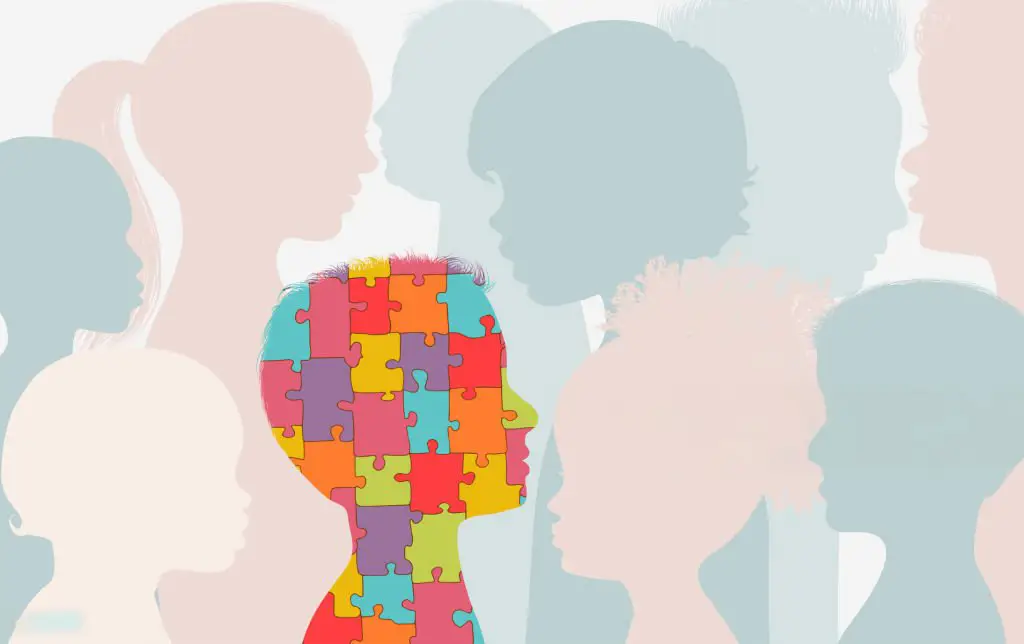
Seeing the world through the child’s eyes to understand, connect and nature growth with empathy and authenticity.
Therapeutic Supports

Everyone needs the right level of co-designed therapeutic support at the right time to succeed.
Behaviour Support
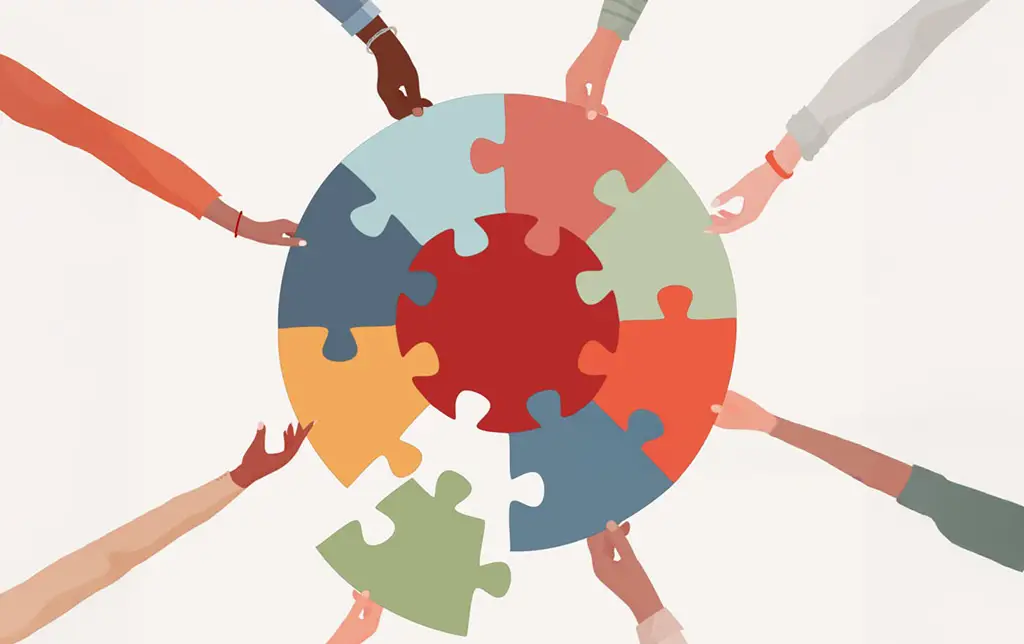
Behaviour is rarely random – it is shaped by a chain or events and contributing factors
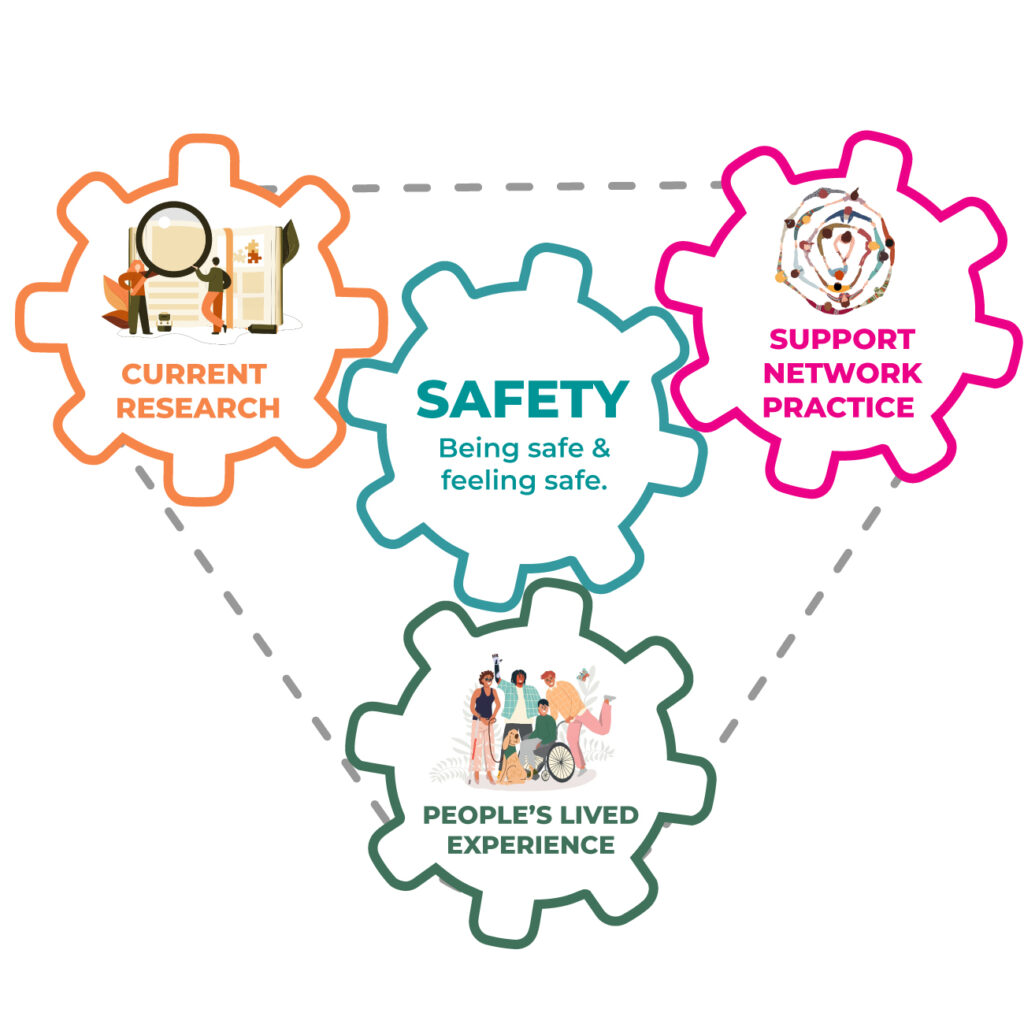
CALMER’s integrated evidence-informed practice
Co-designing neuro-affirming therapeutic support through shared understanding- Blending knowledge and understanding from different sources and perspective is inclusive, useful and respectful.
- Knowledge and experience is personal, context driven and evolving.
- It allows for innovation and adaptation based on factors and context at individual, organizational, system and service levels.
- It reduces bias and lead to more meaningful, effective co-designed practice.
The elements are connected
Safety is foundation of all support.
Everyone needs to be safe and feel safe.Support Network Practice
Knowledge, experience and day-to-day support in actin. Practitioners, support workers, family, carers, educators and others whto support the person.People’s Lived Experiences
Their lived experience, perspective, strengths and what matters to them and their family.Current Research
Current best available research, evidence and evaluationUnverstanding how behaviour emerges and what it means
Safety is the foundation of all support. All elements interact continuously to support each person to be safe and feel safe.
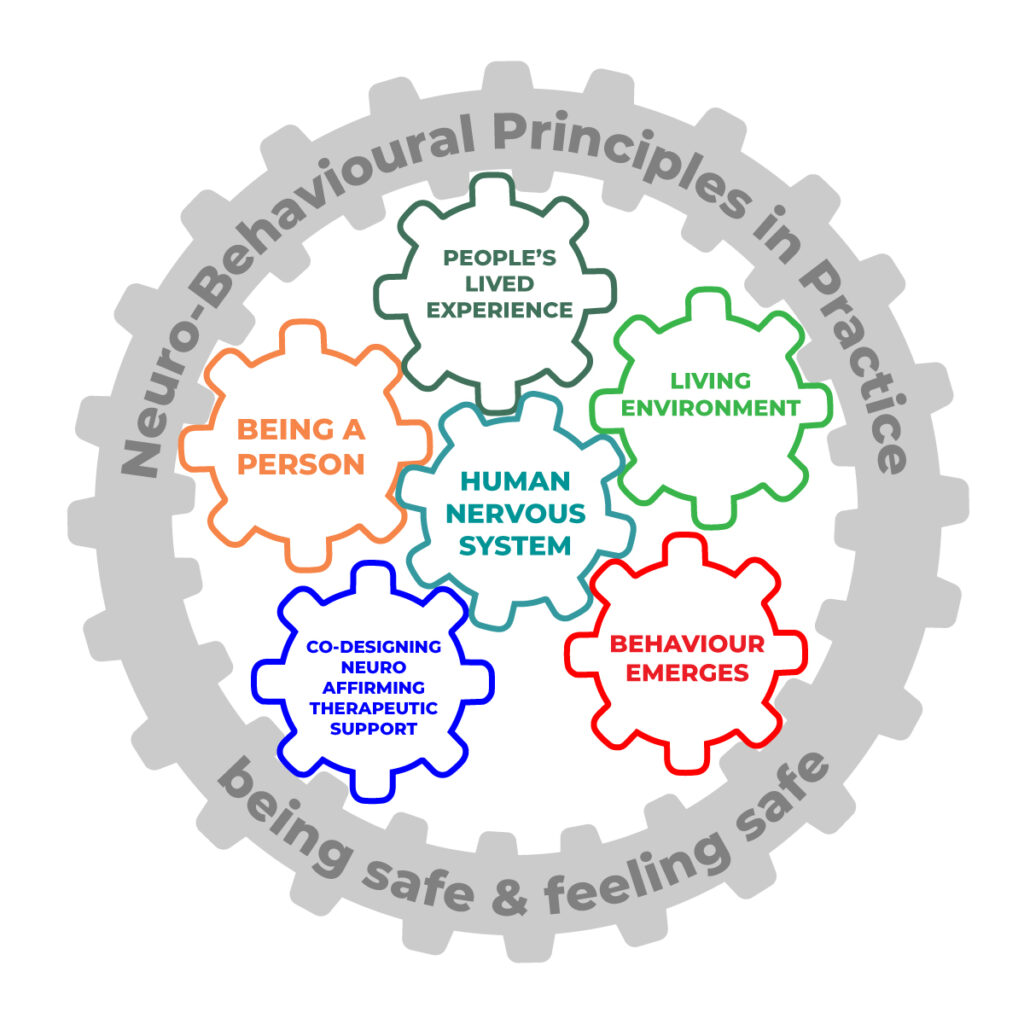
BEING A PERSON
- Strengths
- Beliefs values
- Culture identify
- Likes dislikes
- Aspiration and goals
- Ability to cope with stress
PEOPLE’S LIVED EXPERIENCE
- My story and what I have lived through
- Health & conditions
- Symptoms
- Diagnosis
- Daily life impact
- Adverse experiences (including prolonged stress, or feeling unsafe
- Support that have helped
LIVING ENVIRONMENT
- Where I live, learn, work, connect.
- Where life happens.
- Safe and unsafe Physical and social environment
- Relationships and connections
- System and services influencing experiences
- Organisational culture, values, beliefs, policies
- Community context and resources Opportunities and barriers
BEING SAFE & FEELING SAFE
- Being safe and feeling safe.
- CALMER – Human Neuro-Behavioural System
- Cortex – thinking brain
- Amygdala – sensing safety-danger
- Limbic – emotional brain
- Memory – Lived Experiences
- Emotional Regulation – Ability to deal, cope and manage stress in the moment
HOW BEHAVIOUR EMERGES
- Where am I emotionally?
- Frannogram Neuro-Behavioural Continuum
- Understanding the relationship between emotions and behaviour.
- Critical Analysis Process
- Chain of events
- Contributing factors
- Was the behaviour the problem or was it the consequence of the problem?
- Understanding how the same or similar behaviour can reflect different underlaying meanings.
CO-DESIGNING NEURO-AFFIRMING THERAPEUTIC SUPPORT
- Co-creating the changes we want to see.
- Neuro-affirming language and perspective
- Co-design is part of the process how decisions are made and support provided
- Support decision-making and consent
- Least restrictive practice
- Upholding human rights, dignity, lived experiences
- Building capable environments
- Ongoing capacity building
- Guided by an evidence-informed practice framework Together we co-create support that is respectful, effective and sustainable.
What People Are Saying
“Understanding the CALMER approach helped me reframe my teaching practice, changing the environment and teaching to strengths rather than reacting to behaviour.”
Teacher
“The training reinforced that we sometimes miss the ‘human’ approach. It really comes down to connection and regulation through connection.” “I valued the focus on building capacity, rather than expecting staff to know what to do in the heat of the moment.”
“You explained behaviour and emotional states so clearly and simply that I could apply it immediately with my children.. Your diagrams helped me change how I respond as a parent.”
Irini, mother
“This approach should sit at the foundation of school operations to support the wellbeing of students and staff.”
Heather, School Counsellor
“After completing the training, I felt confident to apply CALMER directly in practice. Explaining the approach supported a more inclusive and collaborative process.”
Alicia McLachlan, Senior Behaviour Support Practitioner / Social Worker
I have already incorporated CALMER concepts into my clinical placements. It has shaped my practice to be more person-centred and capacity-building.”
— Amy, Parent
“The training taught me to avoid assumptions and recognise that there is always more beneath the surface when interpreting behaviour.”
Obinna, Support Worker
I explored approaches like the Neurosequential Model, the Low Arousal Approach, and the Trauma Wisdom Circle — all of which added value, but still felt incomplete. What I love about CALMER is how it brings the research from all these pioneers and much more together into one approach.”
— Pam, Autistic parent and family educator