CALMER is more than a framework
It’s the orbit of our shared humanity—grounded in feeling safe, connected, heard, and understood with empathy and authenticity.
CALMER: More Than a Framework
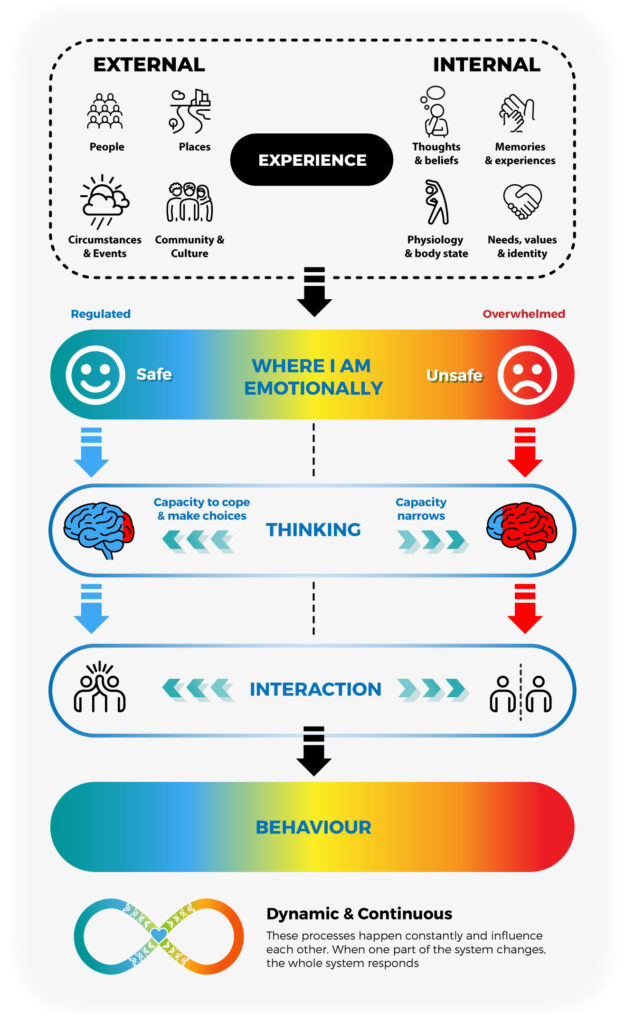
The CALMER Framework is a neuro-behavioural approach. It is not a behavioural management approach.
CALMER integrates neuroscience, behaviour science, and lived experience into a living and evolving ecosystem. It helps us understand the relationship between emotions and behaviour in real time — seeing the person first, then their behaviour — so that support is co-designed, neuro-affirming, and therapeutic.
CALMER focuses on building capable environments that facilitate learning and capacity building. It emphasises understanding the relationship between emotions and behaviour to create shared meaning, enable co-planning, activate plans, and sustain ongoing shared learning.
This is what makes CALMER both practical and universal: a framework for governance, training, and practice that restores alignment and congruency in human services.
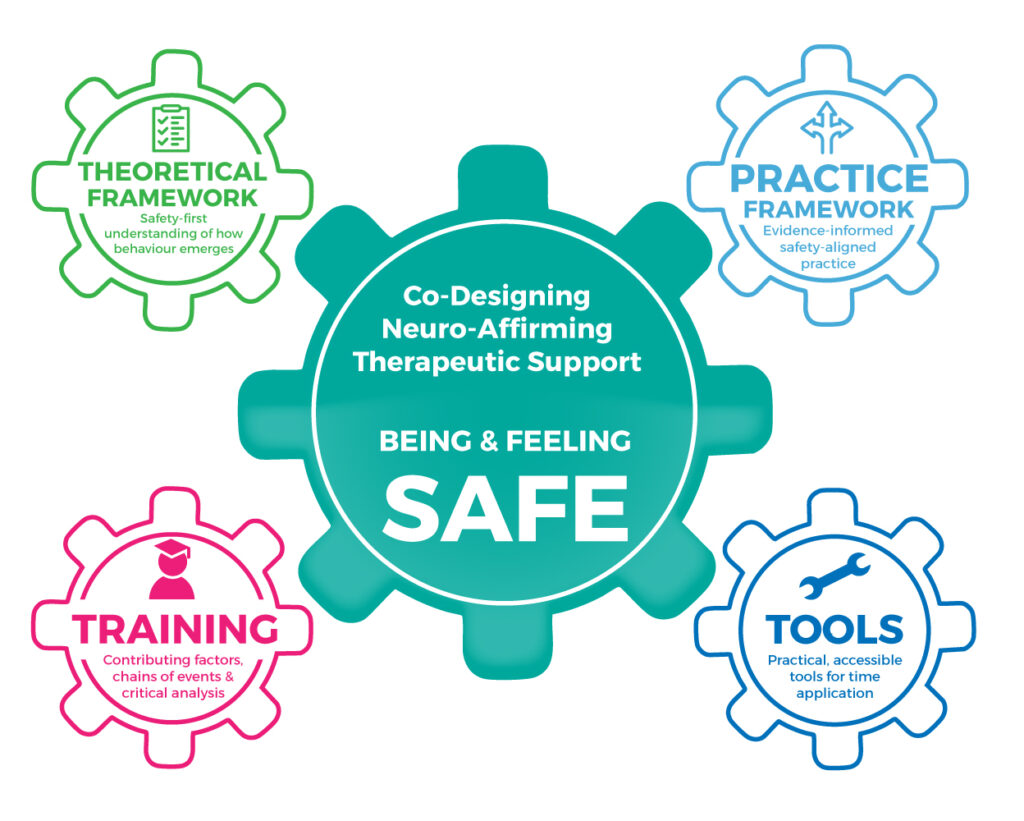
Integrated Evidence-Informed Practice Framework
Designed to realign support with what truly matters to being human — the universal need to feel safe, connected, heard, and understood with empathy and authenticity.
How the CALMER Framework
Came About
CALMER was born from both lived experience and professional practice.
I have been working in the disability field since 2000 and practising as a behaviour support practitioner since 2011. By 2018, I began to notice a gap between the traditional focus on the function of behaviour and the reality of practice. I became curious and intrigued. It wasn’t that what I was noticing was entirely new — but it felt like very little was being done about it. I started exploring and reading more deeply into rethinking the ‘function of behaviour.’
It began with a simple two-minute talk on rethinking the function of behaviour — and the rest is history.
By 2020, I was already using the framework in practice, though it had no name. I resisted attaching yet another ‘disability’ or ‘behaviour’ label.
In September 2021, my wife and mentor, Amy, suggested the name CALM (Cortex and Limbic Modulation), which captured the essence of the framework at that stage. However, feedback from a dear OT colleague pointed out that CALM was not comprehensive enough, as it did not reflect the full picture. I continued studying and exploring.
During a three-day training in February 2022, the CALMER Approach (Cortex, Amygdala, Limbic, Memory, Emotional Regulation) emerged — capturing a deeper understanding of the brain–emotion–behaviour connection. CALMER truly crystallised then, closing the loops and taking its present form.
Through years of knowledge translation across neuroscience, behaviour science, trauma-informed practice, and co-design — and shaped by voices of lived experience — CALMER became an evidence-informed, neuro-behavioural practice framework.
CALMER is not a fixed method but a living ecosystem — with the capacity to restore alignment and congruency in practice by focusing on the environment, shared meaning, and co-designed therapeutic supports.
Since 2022, CALMER has been contributing through presentations at national and international conferences. From May 2022, it has also been delivered through training and workshops to practitioners, allied health professionals, families, educators, and other professionals. CALMER has been sought out by schools and disability service providers alike — demonstrating its universal relevance and practical value.
Aviation has also been a source of inspiration. Just as aerodynamics in an airplane must be built in alignment with the natural law of gravity, human services must be built in alignment with our universal principle of shared humanity — so that every person feels safe, connected, heard, and understood with empathy and authenticity. Engineers do not fight against gravity; they design with it, ensuring every part of the plane is aligned and congruent. Otherwise, the plane will not fly.
In the same way, CALMER does not fight against our natural human survival instinct. Instead, it co-designs support, training, and capable environments with this principle in mind — so that everyone feels safe, connected, heard, and understood with empathy and authenticity. Alignment and congruency are the aerodynamics of human services — the non-negotiables of the human living ecosystem.
What people are saying
I explored approaches like the Neurosequential Model, the Low Arousal Approach, and the Trauma Wisdom Circle — all of which added value, but still felt incomplete. What I love about CALMER is how it brings the research from all these pioneers and much more together into one approach.”
— Pam, Autistic parent and family educator
“It was good to hear a different approach… Very insightful, and justified a lot of unanswered questions.”
— Emma, Behaviour Support Practitioner
“We see this training as a significant milestone in our focus to continuously improve the quality of supports delivered to participants”.
NDIS Provider
“As the principles of your model are universal, I see a real strength of your model in helping others — carers, staff, and families — to understand and challenge assumptions, perceptions, and labels relating to the person they support or interact with.”
Michael, Psychiatrist
“I wasn’t sure about having yet another behaviour support plan… but you started from the beginning and helped us understand why the behaviours were escalating. You made it simple and practical—we feel like we have our life back.”
— Amy, Parent
“We see this training as a significant milestone in our focus to continuously improve the quality of supports delivered to participants”.
NDIS Provider